
A corporate fuel card looks like a credit card that only pays for fuel. Used well, it saves time and money. Used for fraud, it quietly drains the fuel budget, and without the right data the fraud is almost impossible to see.
Key takeaways
- Fuel cards record what was paid for, not what went into the tank.
- Comparing card transactions with fuel sensor data and vehicle location reveals the gap.
- In this case, 2 to 15 litres per refuel were going missing.
Why companies use fuel cards
- Drivers do not pay from their own pocket or chase reimbursements. One swipe and they can fill up.
- Companies pay the card provider directly and see the time, date and place of every transaction online, which helps plan fuel budgets.
It is a good arrangement for both sides, until someone starts using the card for fraud.
The case
A large online retailer connected 100 delivery trucks and pickups to KLOUDIP fleet management. They cover huge distances every day, so fuel is a major cost. KLOUDIP fitted high-accuracy fuel level sensors that report every refuel and every drop. Classic fuel theft from the tank stopped. Then attention turned to the fuel cards the company had trusted for years.
Sensor data against card data
KLOUDIP integrated FiOS with the company's fuel card system so both sets of data appeared in one report.
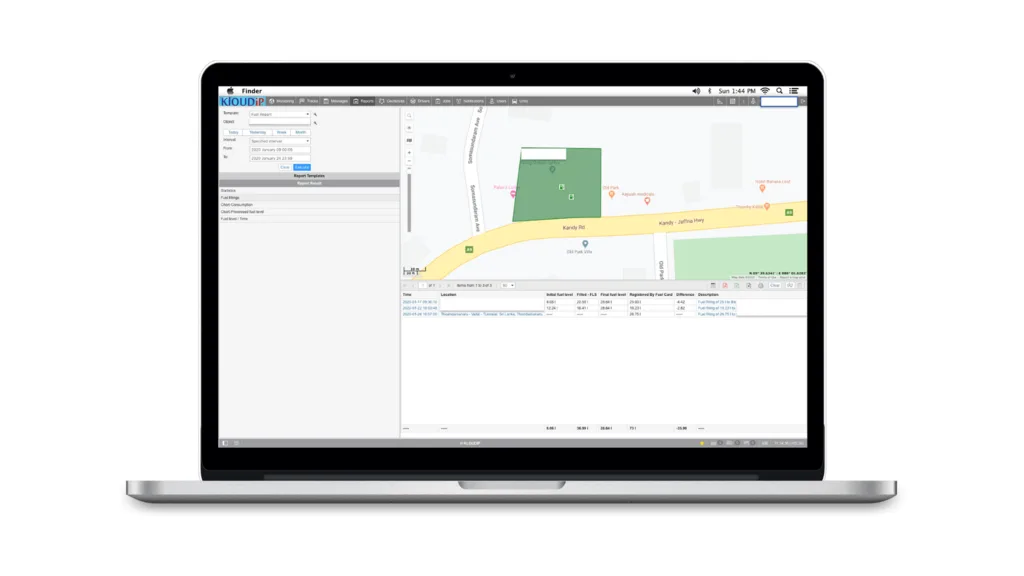
Fuel report in FiOS
From the first report, managers saw a gap between the fuel the sensor recorded going into the tank and the litres paid for on the card: between 2 and 15 litres per refuel.
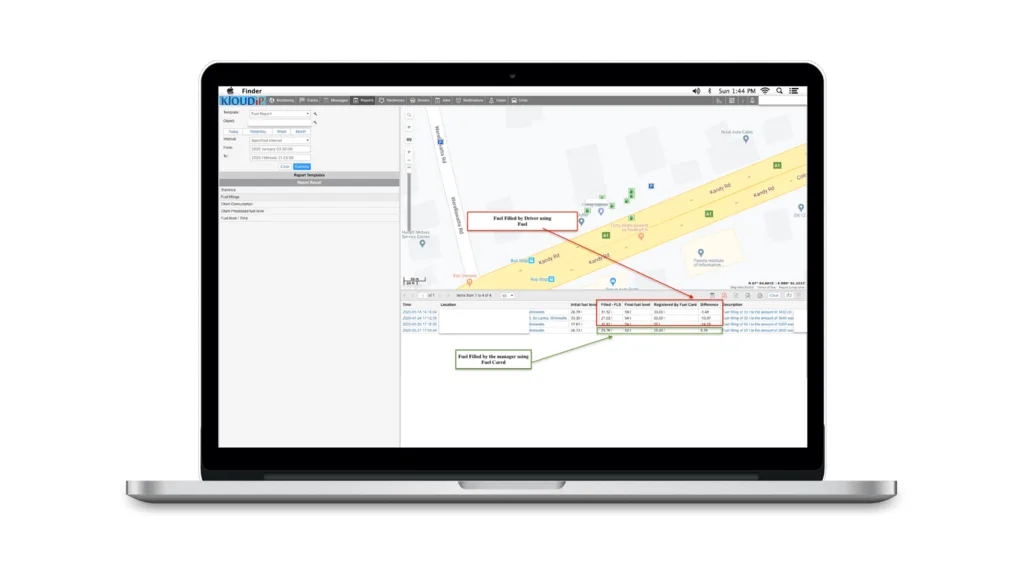
Fuel filled: sensor against fuel card
Ruling out the alternatives
There were three possible explanations: faulty sensors, a bad integration, or fraud. KLOUDIP checked the first two. The sensors were correctly calibrated and 98% accurate, and there were no data transmission errors. That left fraud: drivers filling less than they paid for and putting the rest into cans, or taking cash from station staff who bought the fuel at a discount.
How the fraud worked
Case 1: the truck was never there
The card was swiped at a filling station, but the sensor showed no refuel. The truck's location at that time showed it had never visited the station. The driver had gone there another way, swiped the card, and taken the fuel or the cash.
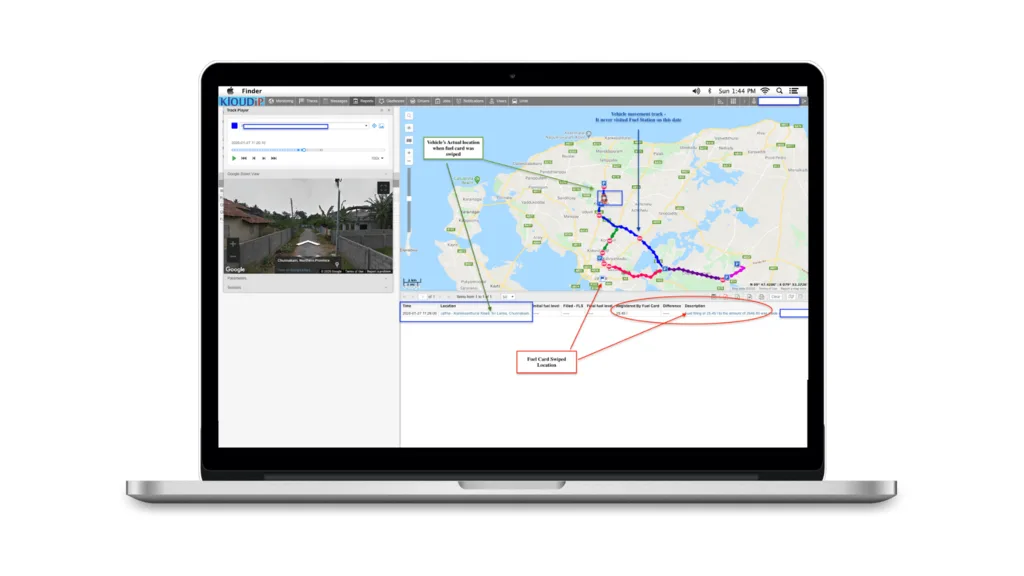
Card swipe location against the truck location
Case 2: part of the fuel went elsewhere
The sensor recorded much less than the card. To prove the sensor was right, a trusted employee refuelled the same truck with the card. The sensor matched the card almost exactly, confirming the earlier gaps were fuel going into the driver's own containers.
How to protect your fleet
- Do not rely on fuel cards alone. Measure the fuel that reaches the tank, with fuel level sensors or CANBUS data.
- Put card transactions and tank data side by side, with vehicle location at the time of each swipe.
- Watch consumption patterns, stops and idling, and act on unusual results.
- Reduce harsh driving, which wastes fuel even when nobody is stealing it.
More ideas in our fuel economy tips for businesses.
Frequently asked questions
How can fuel card fraud be detected?
By comparing each card transaction with the fuel actually added to the tank, and with where the vehicle was at the time of the swipe.
Are fuel level sensors accurate enough?
Correctly calibrated sensors are highly accurate. In this case they were 98% accurate, enough to reveal gaps of a few litres.
Can fuel card data be connected to fleet software?
Yes. KLOUDIP has integrated FiOS with fuel card systems so transactions and sensor data appear in the same report.
Talk to us
Using fuel cards? Let us compare them with real fuel data from your vehicles. Contact KLOUDIP
First published on KLOUD LIVE in October 2020. Updated and revised in November 2026.