
GPS tracking does not sound like a healthcare topic. But hospitals and laboratories run fleets too, and every rupee spent on fuel or idle vehicles is a rupee not spent on patients. This case shows how one leading healthcare provider in Sri Lanka used fleet software to cut the cost of moving lab samples, and paid back its investment in two months.
Results at a glance
- 10–15% lower fuel use
- 20–25% higher driver efficiency
- Samples delivered on time and in good condition
- Investment paid back within two months
The challenge: 80 vans, one island, tight deadlines
Hospitals and laboratories move blood samples and other specimens from collection centres to the lab every day. During the COVID-19 period the volume grew sharply with PCR testing, but the need was there long before and is still there today.
The hospital in this case ran 80 vans and light commercial vehicles for sample delivery:
- Each vehicle used up to 12.5 litres per 100 km.
- Drivers covered about 500 km a day on work trips, plus another 100–150 km of private driving that nobody could see.
- Drivers were focused on speed rather than careful driving, which raised wear and fuel use.
- A late sample could mean a penalty, or a test that had to be repeated.
Fuel, maintenance, penalties and driver pay all landed on the hospital's budget. It asked KLOUDIP for a complete fleet management service.
What KLOUDIP set up
KLOUDIP connected all 80 vehicles to FiOS, its GPS tracking and fleet management platform. The value came from the software, not the boxes: three features made the difference.
1. Shorter routes, less fuel
KLOUDIP built new routes from every collection point to the laboratories, optimised for the fewest kilometres and the fastest arrival. Fuel reports then showed the effect vehicle by vehicle.
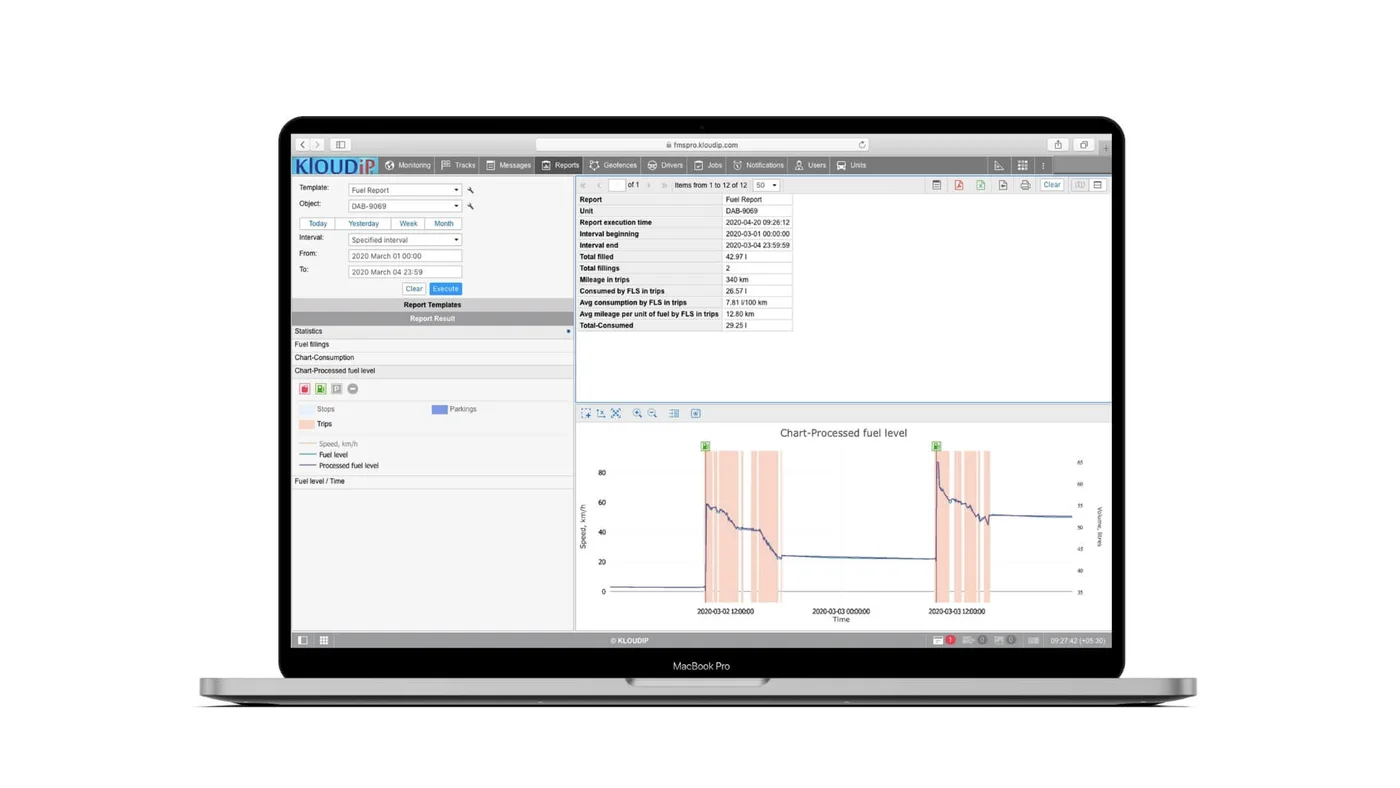
Fuel consumption by vehicle in FiOS
2. Work trips and private trips, separated
Each vehicle got a simple button. The driver presses it when switching between work and private use. FiOS then counts hours and fuel for work trips only, which makes fuel accounting and driver pay simple and fair. No more guessing, and no more arguments.
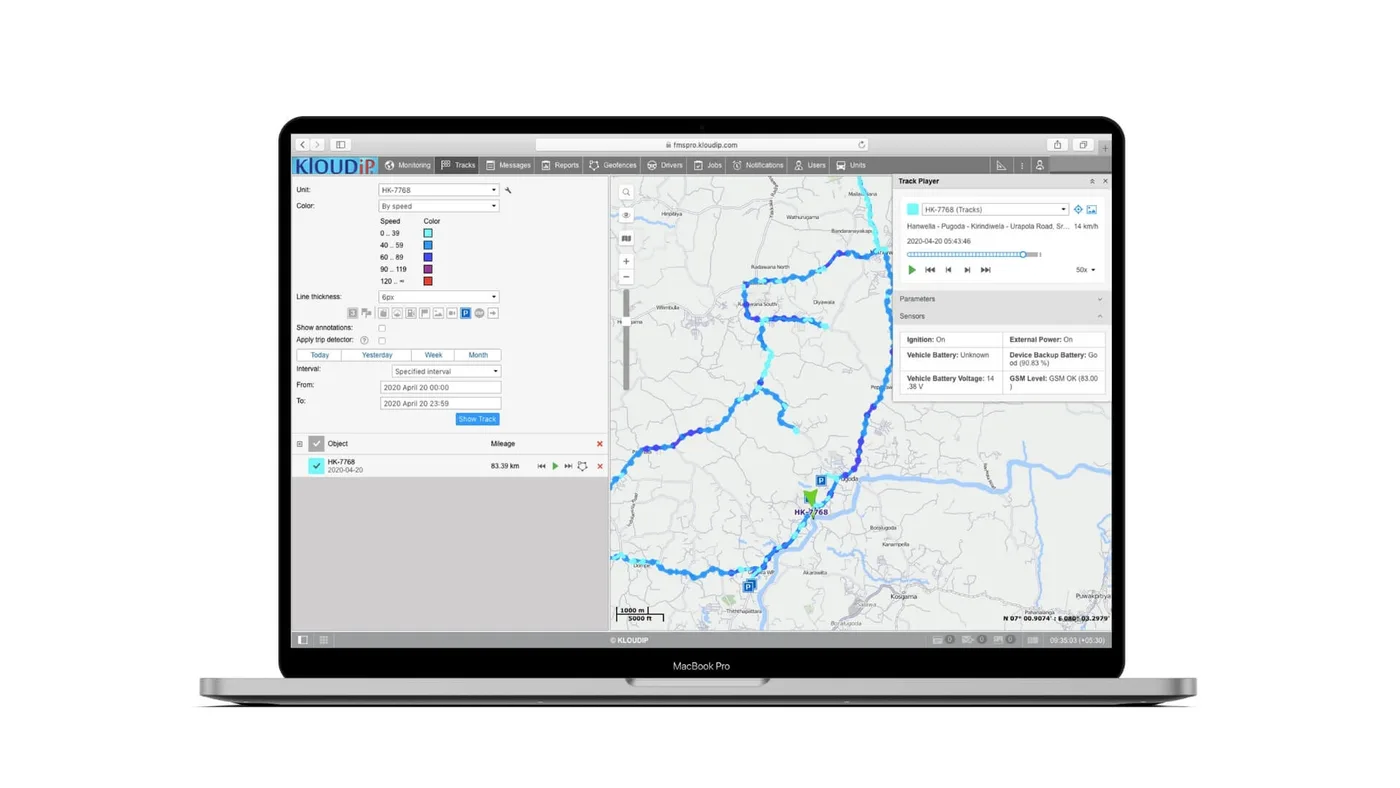
Work and private trips, reported separately
3. Live monitoring and alerts
FiOS shows in real time when a driver is idling or takes the wrong route. The dispatcher is alerted at once and can act before a sample is late.
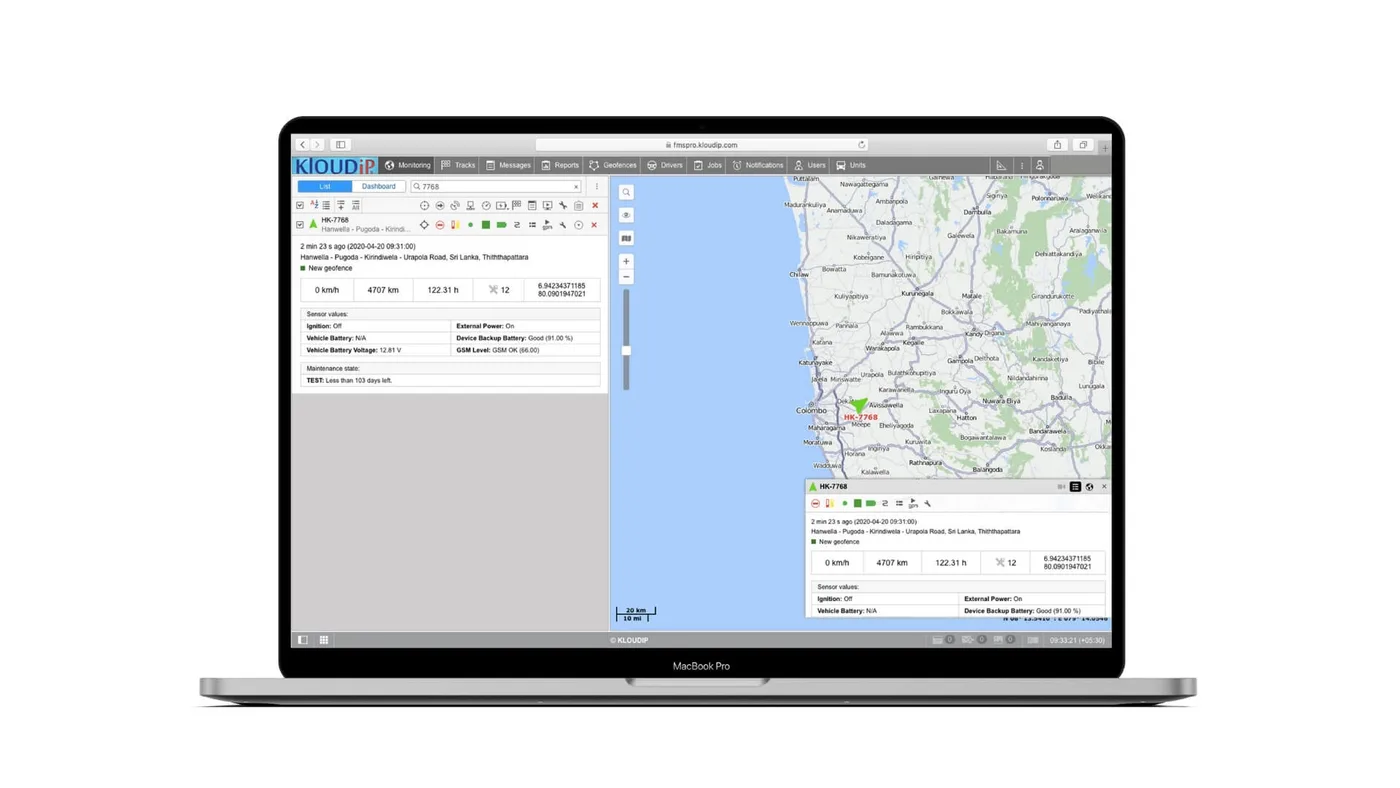
Live tracking of sample delivery vans
The results
With only a few features switched on, the hospital saw:
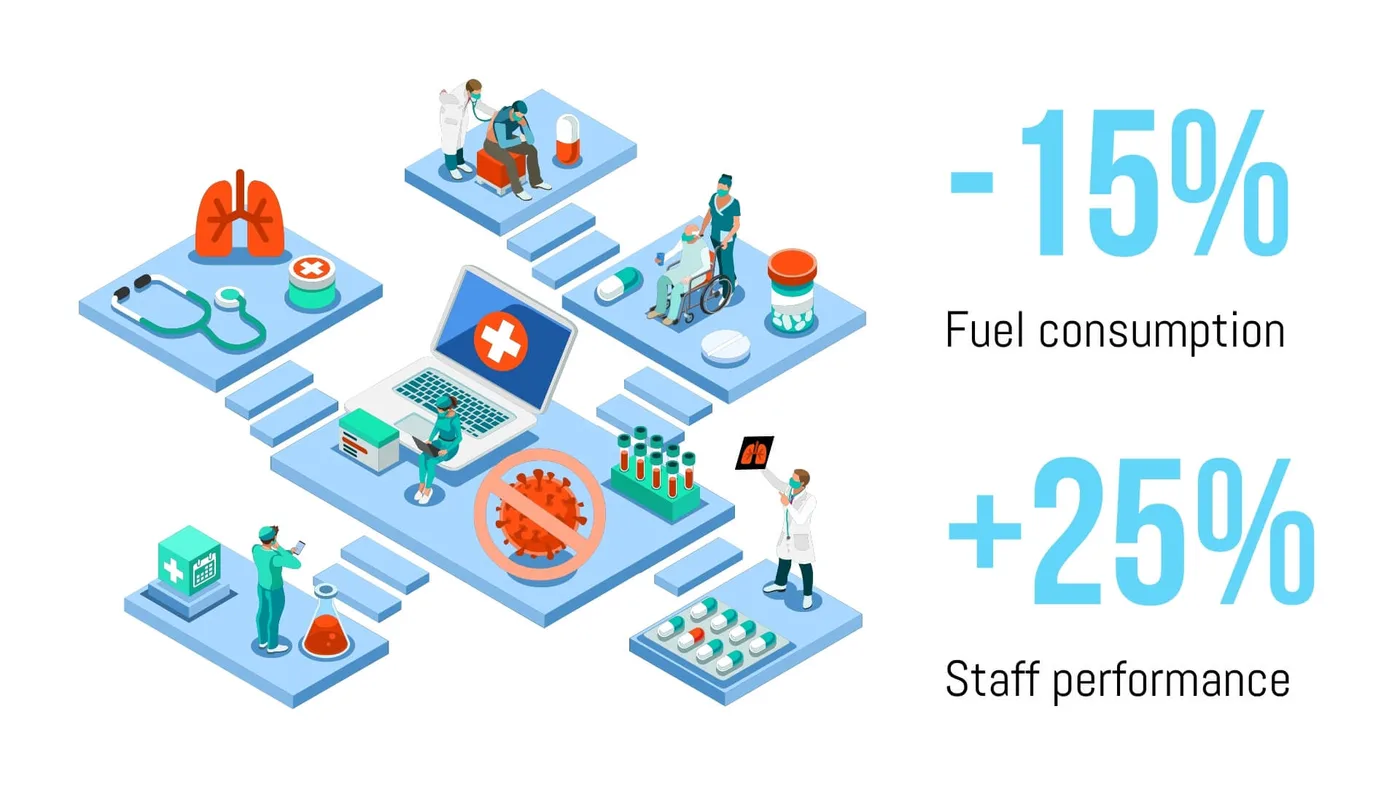
- 10–15% fuel savings from shorter routes and fewer private kilometres.
- 20–25% higher driver efficiency from optimised routes and less private use.
- On-time, unspoiled samples thanks to the fastest routes and live alerts.
- Payback within two months on the whole investment.
What else healthcare fleets can add
This was a starting point. The same tracking data can also power:
- Driver behaviour monitoring for safer, smoother driving and lower wear.
- Temperature monitoring with HAZER for samples, vaccines and medicines that must stay in range.
- Digital proof of delivery with photos and signatures, using the EPORT driver app.
- Automated driver pay based on actual work trips.
- Maintenance reminders based on real mileage and engine hours.
Support works the same way for every customer: each request gets a ticket and a reference number, handled by a team of specialists, and Iris, KLOUDIP's AI assistant, can open a ticket or give its status by phone at any time.
Frequently asked questions
How quickly does fleet tracking pay back for a healthcare provider?
In this case, within two months. Results depend on fleet size, distances and how the vehicles were used before.
Can the system tell work trips from private trips?
Yes. A driver button marks each trip as work or private, so fuel and pay are calculated for work trips only.
Can we monitor sample temperature as well as location?
Yes. Wireless temperature sensors send readings to HAZER, which alerts you when a limit is broken.
Talk to us
Run vehicles for a hospital, laboratory or pharmacy chain? Let us show you what your own fleet data can do. Contact KLOUDIP
First published on KLOUD LIVE in October 2021. Updated and revised in November 2026.